


When most people think of honey, they imagine a single, generic flavor: sweet, golden, and uniform. However, honey is as nuanced, complex, and terroir-driven as fine wine or specialty coffee. Honey takes on the distinct aroma, color, viscosity, and chemical profile of the specific floral nectar harvested by bees during a blooming window.
When beekeepers strategically place apiaries in regions where a single plant species dominates the blooming landscape, the bees harvest predominantly from those flowers. The result is monofloral (single-origin) honey.
Far from being an artificial marketing gimmick, single-origin honey concentrates the unique medicinal virtues of the parent plant. Here is an in-depth guide to India’s most prized monofloral honey varieties and how to select the right one for your targeted health needs.
1. Jamun Honey: The Low-GI Choice for Blood Sugar Balance
- Botanical Origin: The white blossoms of the Indian Blackberry tree (Syzygium cumini).
- Appearance & Flavor: Dark amber to deep mahogany; viscous with a distinctive bittersweet, slightly astringent finish.
- Best Time to Consume: In the morning stirred into room-temperature water or paired with apple cider vinegar before breakfast.
In traditional Ayurvedic practice, the seeds, bark, and fruit of the Jamun tree have long been prescribed to regulate Kapha and Pitta imbalances related to metabolic health. When bees gather nectar from Jamun blossoms, those bioactive phytosterols pass directly into the honey.
Jamun honey exhibits a lower Glycemic Index (GI) than standard multifloral honeys, resulting in a significantly gentler postprandial glucose curve. Its dark pigmentation reflects high concentrations of gallic acid and anthocyanins, which defend against vascular oxidative stress. It is ideal for individuals monitoring their carbohydrate intake, pre-diabetic wellness routines, and anyone seeking a rich, less-sickly-sweet sugar substitute for morning beverages.
2. Ajwain Honey: The Natural Post-Meal Digestive Shield
- Botanical Origin: The delicate umbels of Carom seed blossoms (Trachyspermum ammi), predominantly cultivated in Rajasthan and Gujarat.
- Appearance & Flavor: Light golden-brown; sharp, herbaceous aroma with a warm, spicy undertone.
- Best Time to Consume: 15 to 20 minutes following a heavy lunch or dinner.
Carom seeds are an indispensable kitchen remedy across India for indigestion, gas, and abdominal cramping due to their high concentration of thymol a potent natural antispasmodic and carminative compound.
Ajwain honey stimulates the gastric mucosa to release digestive acids, easing heaviness and bloating after high-protein or rich meals. Furthermore, thymol carried from the blossom nectar suppresses gas-producing intestinal bacteria and coliforms without disrupting beneficial gut flora. It is an excellent match for those struggling with chronic bloating, acid reflux, sluggish post-meal digestion, or IBS-related discomfort. Stir half a teaspoon into warm water with a pinch of rock salt when heaviness strikes.
3. Sidr (Beri) Honey: The Liquid Gold of Therapeutic Care
- Botanical Origin: The blossoms of the ancient wild Jujube/Beri tree (Ziziphus mauritiana), harvested in arid northern and northwestern pockets.
- Appearance & Flavor: Thick, slow-pouring golden-red hue; luxurious, buttery, butterscotch-like flavor profile that resists rapid crystallization.
- Best Time to Consume: One teaspoon straight off the spoon mid-day, during seasonal transitions, or post-workout.
Sidr honey is globally recognized as one of the most elite, medicinally potent honeys in existence, often compared to New Zealand’s high-grade Manuka honey due to its extraordinary phenolic profile.
Sidr nectar contains exceptionally high levels of natural methylglyoxal-like compounds and enzymatic antibacterial activity, making it remarkably effective against antibiotic-resistant microbial strains. High zinc, selenium, and bioflavonoid levels accelerate cellular renewal, making it ideal for soothing sore throat ulcerations or applying topically to slow-healing burns and skin abrasions. Choose Sidr honey for deep immune fortification, postoperative physical recovery, systemic inflammation reduction, and athletic endurance recovery.
4. Tulsi (Holy Basil) Honey: Respiratory & Stress Relief
- Botanical Origin: The aromatic purple and green blossoms of Holy Basil (Ocimum sanctum).
- Appearance & Flavor: Medium amber; unmistakably herbal, calming, and balsamic fragrance with gentle sweetness.
- Best Time to Consume: In the evening, stirred into warm herbal infusions or taken straight off a spoon before bed.
Tulsi is revered as an adaptogen-a botanical agent that assists the body in adapting to psychological and environmental stressors while modulating immune equilibrium.
Tulsi honey is naturally rich in eugenol, camphene, and cineole. These volatile aromatic compounds act as mild expectorants, thinning mucous secretions in the upper respiratory tract and soothing inflamed bronchial pathways. Its viscous demulcent texture coats irritated pharyngeal tissues, offering clinical relief from dry, hacking night coughs superior to common OTC syrups. Use this honey during seasonal transitions, for persistent pollen allergies, chronic throat clearing, coughs, and winding down before sleep.
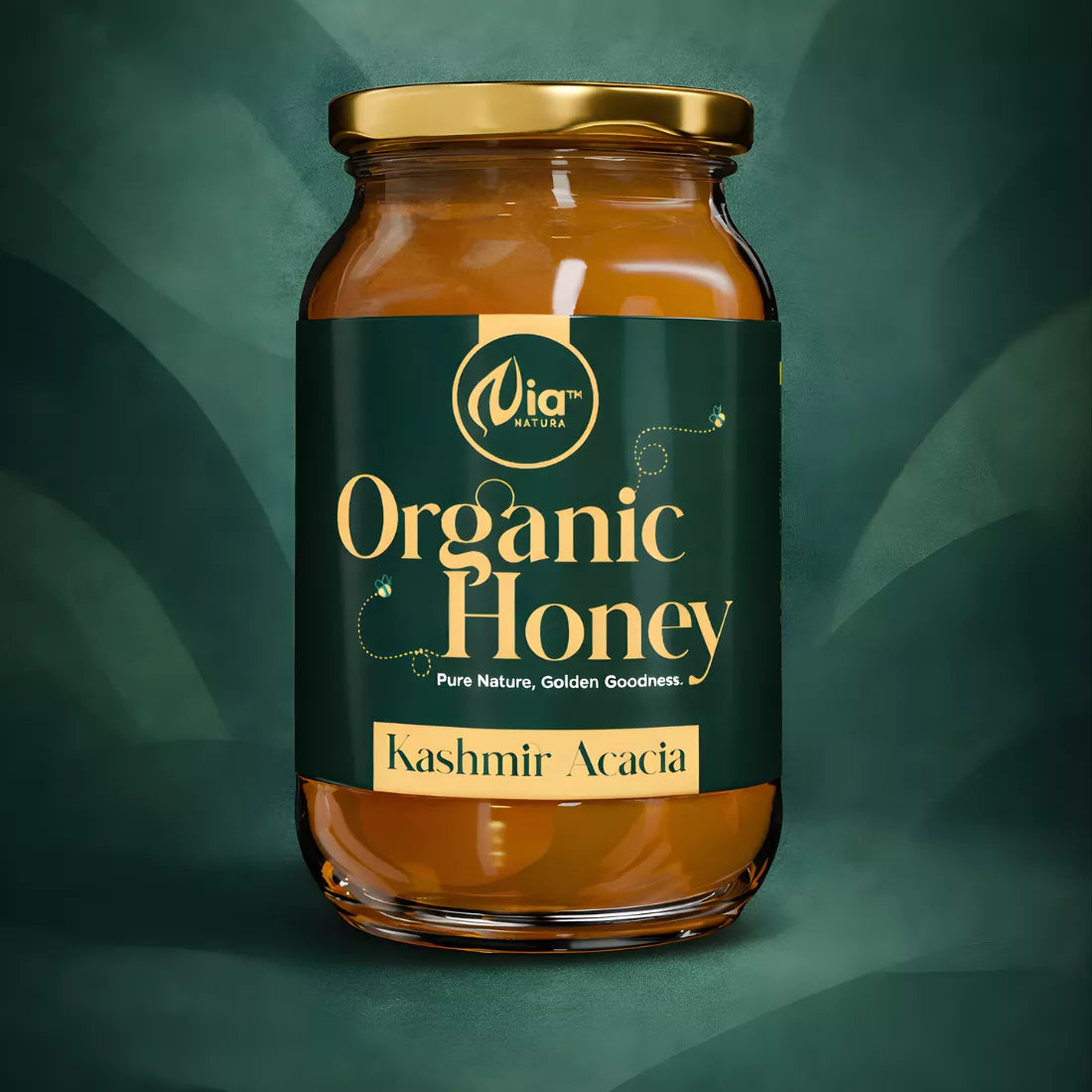
5. Acacia & Kashmir White Honey: Gentle Sweetness for Skin & Daily Energy
- Botanical Origin: Black locust (Robinia pseudoacacia) and wild sub-alpine flora of the Kashmir Valley.
- Appearance & Flavor: Exceptionally pale, light yellow to pure milky-creamy white; subtle, soft floral notes without lingering sharpness.
- Best Time to Consume: Pre-workout, stirred into morning oats, or used as a topical face mask.
Because of its naturally elevated fructose-to-glucose ratio, true Acacia honey remains completely liquid and silky for exceptionally long periods. Its mild, non-irritating nature makes it gentle on sensitive stomachs and easy to digest.
It is ideal for delicate culinary applications where you do not want to overpower subtle green or white teas, DIY topical facial masks for deep skin hydration, and clean pre-workout glycogen replenishment that will not upset the stomach during movement.
Choosing single-origin raw honey bridges the gap between everyday sweet indulgence and targeted, botanical self-care. Match your jar to your physical needs, ensure it is completely raw and unpasteurized, and let nature's specific blossoms do the heavy lifting for your health.
Leave a comment